What Is a Dead Hand in American Mah Jongg?
June 23, 2026 · Bird Bam
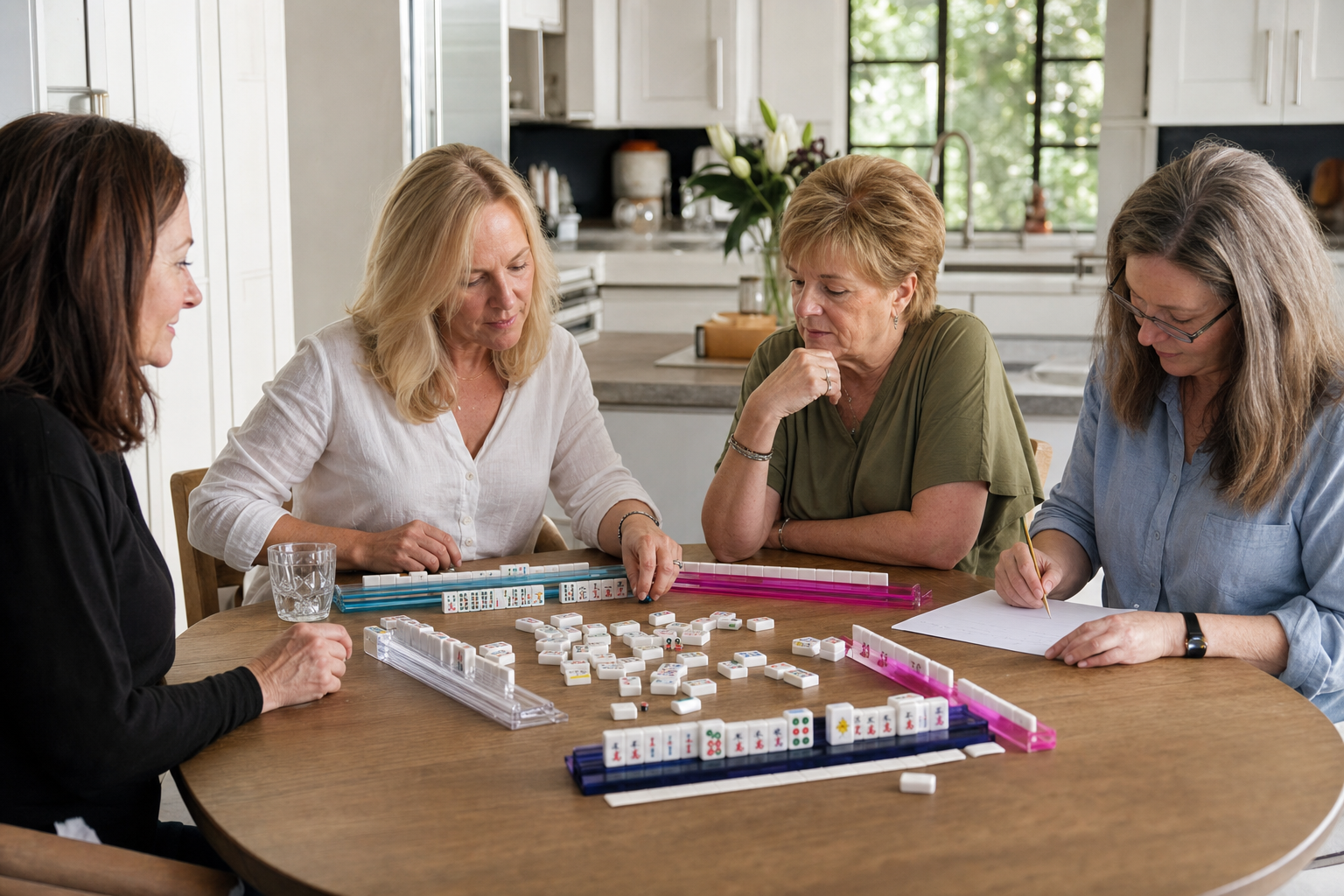
A dead hand in American Mah Jongg is a hand that can no longer legally win the current game because of a rule violation or an impossible tile pattern. The most common causes are an invalid exposure, exposing while pursuing a concealed hand, having the wrong number of tiles, or declaring Mah Jongg in error. Beginners can avoid most dead hands by counting tiles every turn, checking the NMJL card before calling, and treating every exposure as a public commitment.
When should a hand be called dead?
A hand should be called dead only when the evidence is visible and objective. In regular American Mah Jongg play, that usually means the player has exposed tiles, has an impossible tile count, or has announced Mah Jongg and the table can verify that the hand is not complete.
Do not call a hand dead because you suspect a player is pursuing a weak line. A player can have a messy private hand and still be alive. The table needs a clear reason based on exposed tiles, tile count, or a declared win.
A practical table standard is:
- Pause the game before the next player draws.
- Point to the visible issue: the exposure, tile count, or incorrect Mah Jongg declaration.
- Compare it to the current NMJL card without reading card hands aloud beyond what is needed at the table.
- If the hand is dead, the player stops competing to win that game.
- Continue the hand according to your table's normal rules for dead hands and joker exchanges.
Confirm your table's house rules before play.
Common dead hand situations beginners should know
| Situation | Why it can make the hand dead | Prevention habit |
|---|---|---|
| Invalid exposure | The exposed grouping cannot fit any legal hand the player could still make | Check the section, suit, and grouping size before calling |
| Calling for a concealed hand | Concealed hands are meant to be completed without ordinary exposures | Mark concealed lines mentally before the game starts |
| Wrong number of tiles | A player should normally have 13 tiles after discarding, or 14 during the active turn before discarding | Count after the Charleston, after every call, and after every joker exchange |
| Joker in a pair or single | Jokers are used in allowed groupings such as pungs, kongs, and quints, not pairs or singles | Before exposing a joker, ask: “Is this grouping allowed to use a joker?” |
| Mah Jongg in error | The declared 14-tile hand does not match a valid current-card hand | Verify exposures, concealed/open status, and tile count before saying Mah Jongg |
Exposure mistakes are the fastest route to a dead hand
An exposure is public information. Once you call a discard, place tiles on top of your rack, and complete the turn, the table can judge whether that exposure is legal.
For example, suppose you call a discarded 5 Bam and expose three matching tiles. Before you discard, make sure that exposure could actually belong to a valid open hand on the current NMJL card. If the only hand you were aiming for is marked concealed, that exposure creates a problem because concealed hands are not played with ordinary called exposures.
The safest exposure checklist is short:
- Can the discarded tile legally be claimed for this grouping?
- Does the grouping size match something on the current NMJL card?
- Is the target hand open, not concealed?
- If there is a joker, is it being used in a grouping where jokers are allowed?
- After the exposure and discard, will you have the correct number of tiles?
If you cannot answer those questions quickly, it is often better to let the discard pass.
Tile count: the simple 13-and-14 rule
American Mah Jongg has a rhythm that makes tile-count errors easier to catch. A player normally sits with 13 tiles when it is not her turn. On her turn, she draws or claims a tile, temporarily has 14, and then discards back to 13. A winning Mah Jongg hand has 14 tiles.
Worked example: after the Charleston ends, you count 13 tiles. You draw from the wall, now you have 14. You decide not to declare Mah Jongg, so you discard one tile and return to 13. If you accidentally keep 14 after discarding, or discover you only have 12 when your turn begins, pause immediately and let the table resolve it under its rules.
Counting sounds basic, but it prevents many avoidable dead-hand arguments.
What happens after a hand is dead?
A dead hand is no longer eligible to win that game. The player's already-exposed tiles commonly remain visible, and the rest of the table continues. Depending on the situation, previously exposed jokers may still matter for joker exchange decisions, while a fresh mistaken exposure may not be treated the same way.
The key etiquette point is to keep the correction calm and specific. Say what happened, verify it, and move on. A dead hand should not become a lecture, especially in a beginner group.
How Bird Bam helps at the table
Dead-hand problems often start with table friction: someone is tracking score on paper, someone else is checking exposures, and a beginner is trying to remember whether she has 13 or 14 tiles. Bird Bam helps reduce that clutter by giving groups an iOS companion for American Mah Jongg scoring and group play, so the table can keep the hand, score, and game flow organized.
Bird Bam does not replace the current NMJL card, and players still need to know the rules. It does help the group keep scorekeeping from becoming another source of confusion while everyone focuses on the game in front of them.
If your group wants a cleaner way to keep score and stay focused during American Mah Jongg, Bird Bam gives your table a simple iOS companion for playing together.
FAQ
Can I call my own hand dead?
At many American Mah Jongg tables, another player calls the hand dead based on visible evidence. If you realize you made a mistake, pause and let the table resolve it according to the rules you agreed to use.
Is a bad strategic hand the same as a dead hand?
No. A bad hand may be unlikely to win, but it is still alive if it has not broken a rule and could legally become a current-card hand.
Does one wrong exposure always make the hand dead?
An exposure can make a hand dead when it is invalid, contradicts the hand being played, or makes the hand impossible. The table should verify the exposure against the current NMJL card before making the call.
Can a concealed hand ever use a called discard?
A concealed hand is not played with ordinary exposures. The major beginner takeaway is simple: if the line is concealed, do not call discards for exposed groupings while pursuing it.