Self-Pick vs. Discard Wins in American Mah Jongg Scoring
June 29, 2026 · Bird Bam
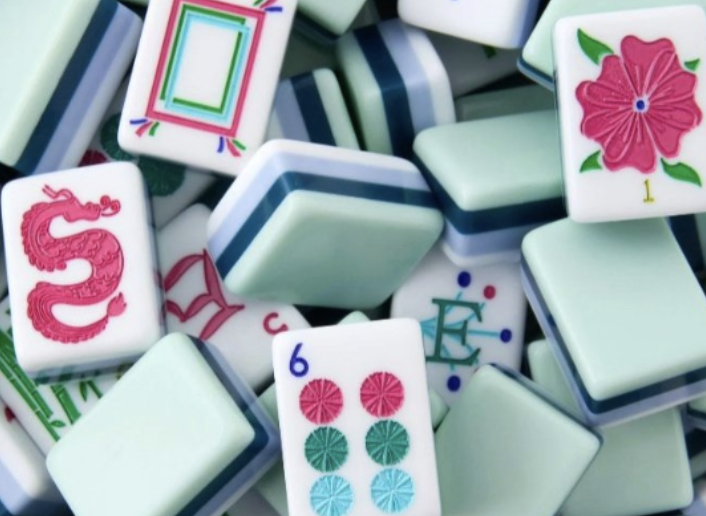
In American Mah Jongg scoring, a discard win and a self-pick win pay differently. On a discard win, the player who threw the winning tile pays the winner double while the other two players pay the hand value; on a self-pick win, all three opponents pay double. That one difference is the reason a 25-point hand can be worth 100 total points on a discard win but 150 total points on a self-pick.
What changes when the winning tile is picked or discarded?
The winning hand still comes from the current NMJL card, and the printed value of that hand is the starting point. NMJL card hand values commonly run about 25–75 points, depending on the hand and the card year.
The payment changes based on how Mah Jongg is declared:
| Win type | Who supplied the winning tile? | Who pays double? | Example total for a 25-point hand |
|---|---|---|---|
| Discard win | Another player discarded it | The discarder only | 50 + 25 + 25 = 100 |
| Self-pick win | Winner drew it from the wall | All three opponents | 50 + 50 + 50 = 150 |
That is the core mechanic beginners should memorize: discarder pays double; self-pick makes everyone pay double.
Step-by-step scoring for a discard win
Use this flow when a player calls Mah Jongg on another player’s discard:
- Find the completed hand on the NMJL card.
- Read the printed point value, such as 25, 30, 35, 40, 50, or more.
- Identify the player who discarded the winning tile.
- The discarder pays double the hand value.
- The other two non-winning players each pay the hand value.
- Record the winner, hand value, win type, and payments before the next deal.
Worked example: 25-point discard win
Suppose West calls Mah Jongg on East’s discard for a 25-point hand.
- East discarded the winning tile, so East pays West 50.
- North did not discard it, so North pays West 25.
- South did not discard it, so South pays West 25.
- West receives 100 total points.
The hand is still a 25-point hand. The total payout is higher because the discard rule makes one opponent pay double.
Step-by-step scoring for a self-pick win
A self-pick win happens when the winner draws the final needed tile from the wall and declares Mah Jongg. No opponent discarded the winning tile, so the double payment applies to all three opponents.
Use this flow:
- Confirm the winning hand matches the NMJL card.
- Read the printed hand value.
- Mark the win as self-pick.
- Each of the three opponents pays double the printed value.
- Record the total before tiles are mixed for the next hand.
Worked example: 30-point self-pick
Suppose South draws her own winning tile for a 30-point hand.
- East pays South 60.
- North pays South 60.
- West pays South 60.
- South receives 180 total points.
That is why self-pick wins can change a game quickly. A modest printed value can produce a much larger table swing when every opponent pays double.
Quick payout reference
Here are common totals for simple no-bonus scoring:
| Printed hand value | Discard win total | Self-pick total |
|---|---|---|
| 25 | 100 | 150 |
| 30 | 120 | 180 |
| 35 | 140 | 210 |
| 40 | 160 | 240 |
| 50 | 200 | 300 |
| 75 | 300 | 450 |
For a discard win, the formula is: double from the discarder + regular value from two others. For self-pick, the formula is: double from all three opponents.
Where jokerless and concealed bonuses fit
Some tables or NMJL scoring conventions add extra value for special cases such as winning without jokers or completing a concealed hand. Apply those bonuses only after your table agrees how they are being used.
A practical way to handle it is:
- Score the basic win type first: discard or self-pick.
- Add any agreed bonus to the hand value if your table uses it.
- Then calculate who pays single or double.
For example, if your table treats a qualifying jokerless hand as a higher value, agree on that value before calculating the discard or self-pick payments. Confirm your table’s house rules before play.
Why this rule matters during play
Scoring affects strategy, not just bookkeeping. If you discard into another player’s Mah Jongg, you pay more than the other two players. That makes late-game discards important: when an opponent has exposures showing, your safest discard may not be the tile you least want, but the tile least likely to complete that player’s hand.
Self-pick also rewards patience. If you are one tile away and can keep drawing, a self-pick may be worth substantially more than winning on a discard. Beginners should not refuse a legal win just because self-pick pays more, but intermediate players should understand why the table reacts differently to a self-drawn Mah Jongg.
How Bird Bam helps at the table
The math is simple once you know the pattern, but mistakes happen when players are talking, resetting racks, and trying to remember who discarded the winning tile. Bird Bam is an iOS American Mah Jongg scoring and community/group-play app that helps players keep score, track hands and games, reduce scorekeeping friction, and keep the focus on playing together.
Bird Bam does not replace the current NMJL card. Players still need the card to verify the hand and printed value. It fits best after the hand is confirmed, when the table wants a cleaner way to record the score and move into the next game without messy paper arithmetic.
If your group wants a cleaner way to keep score, Bird Bam gives your table a simple iOS companion for American Mah Jongg.
FAQ
Is self-pick always double in American Mah Jongg?
Under common American Mah Jongg scoring, yes: when the winner draws the winning tile, all three opponents pay double the hand value.
Who pays double when Mah Jongg is called on a discard?
The player who discarded the winning tile pays double. The other two non-winning players pay the printed hand value.
Do jokers change the discard versus self-pick payout?
Jokers do not change the basic payout direction. The hand value comes from the NMJL card and any agreed bonuses; then the table applies discard or self-pick payment rules.
What should beginners record after each hand?
Record the winner, the printed hand value, whether the win was by discard or self-pick, who discarded if relevant, and each opponent’s payment.