Pairs, Pungs, Kongs, and Quints in American Mah Jongg
June 29, 2026 · Bird Bam
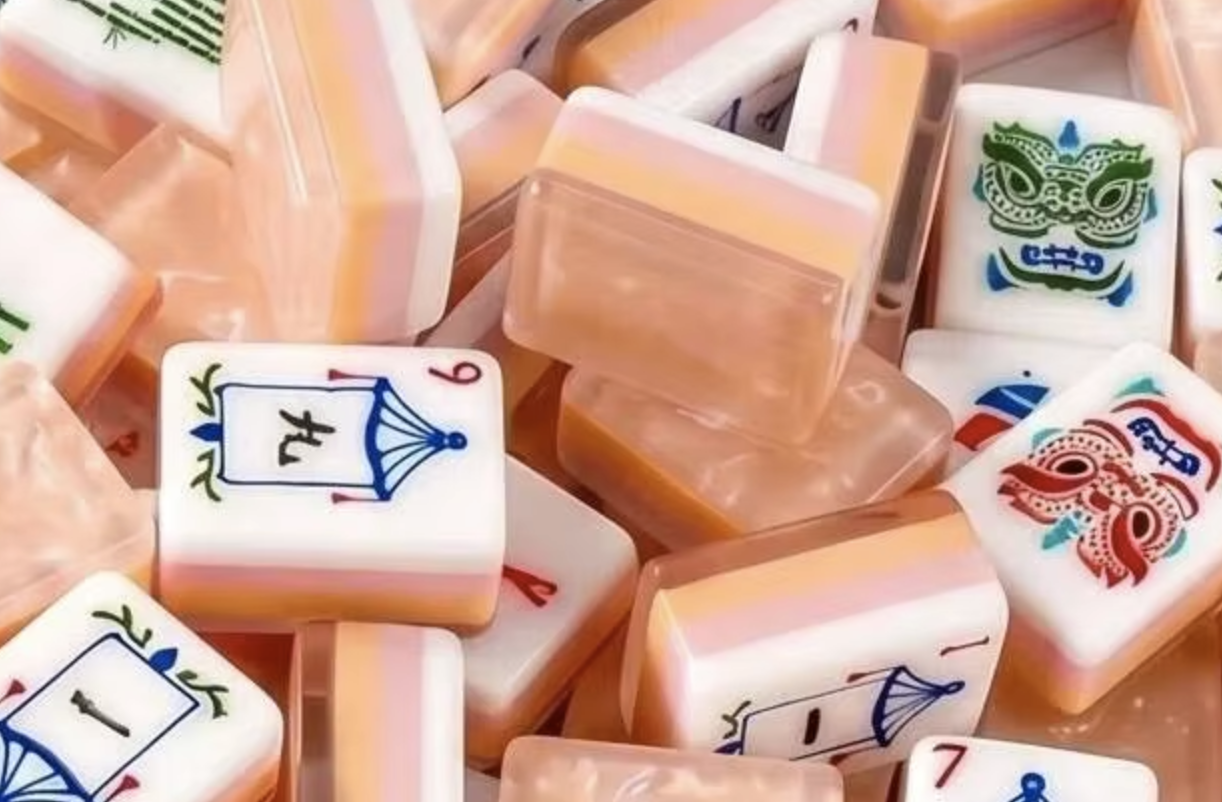
In American Mah Jongg, pairs, pungs, kongs, and quints are the basic tile groups that tell you what a hand is asking for on the NMJL card. A pair is 2 matching tiles, a pung is 3 matching tiles, a kong is 4 matching tiles, and a quint is 5 matching tiles. Once you can spot these groups quickly, the card becomes easier to read, the Charleston gets more purposeful, and discard calls make more sense.
What each tile group means on the NMJL card
The NMJL card uses short patterns and group sizes to describe complete hands. Beginners often focus on the category name first, but the faster path is to read the hand as a sequence of groups: two flowers, three matching 7s, four matching dragons, and so on.
| Group | Tiles needed | Plain-English meaning | Joker use |
|---|---|---|---|
| Single | 1 | One exact tile | No jokers |
| Pair | 2 | Two identical tiles | No jokers |
| Pung | 3 | Three identical tiles | Jokers allowed |
| Kong | 4 | Four identical tiles | Jokers allowed |
| Quint | 5 | Five matching tiles | Jokers usually needed |
The practical rule is simple: jokers can be used in groups of three or more identical tiles, but not in singles or pairs. That means a joker can help complete a pung, kong, or quint, but it cannot stand in for the second tile of a pair.
Pair, pung, kong, quint: the beginner definitions
A pair is exactly two matching tiles. If a hand needs a pair of 5 cracks, you need two natural 5 cracks. A joker does not count. This is why pairs often become the bottleneck in American Mah Jongg hands: you may be close everywhere else, but one missing natural tile can keep the hand from finishing.
A pung is three matching tiles. For example, three 8 bams form a pung. If the hand is open, you may call a discarded 8 bam to complete and expose that pung. If you already have two 8 bams plus a joker, that is also a pung for a joker-eligible group.
A kong is four matching tiles. Kongs are common on the NMJL card and are stronger than pungs because they require one more tile. A kong can include jokers, such as two natural soaps plus two jokers, when the hand allows that group.
A quint is five matching tiles. Since there are only four copies of most numbered and honor tiles in an American Mah Jongg set, quints usually require at least one joker. That is why quint hands can be powerful when you have jokers early and frustrating when you do not.
How these groups change your Charleston choices
During the Charleston, sort your rack by possible groups before deciding what to pass. A simple 60-second scan works well:
- Mark natural pairs first. Pairs are hard because jokers cannot help them.
- Look for near-pungs. Two matching tiles plus a related joker-friendly hand direction can be worth keeping.
- Respect kongs. Three natural matching tiles can become a kong with one more tile or a joker.
- Do not chase quints without support. A quint direction is strongest when you already have jokers or four natural tiles in the right neighborhood.
- Keep flexible tiles when two hands overlap. If the same suit, number, or dragon supports more than one hand, it is safer than a tile that fits only one narrow idea.
A beginner mistake is passing all duplicates because they do not yet resemble a full hand. In American Mah Jongg, duplicates are often the seed of the hand. A pair may become the required pair, a pair plus a joker may become a pung, and three naturals may become a kong.
When you can call a discard for a group
In open hands, you may call a discarded tile when it completes an exposure such as a pung, kong, or quint. You then place the completed group face up on your rack. For example, if you have two 6 dots and another player discards a 6 dot, you can call it to expose a pung if your target hand allows that exposure.
You generally do not call a discard just to make a pair, because pairs are not exposed during regular play. The important exception is calling for Mah Jongg: if the discarded tile completes your entire legal hand, you may call it to win.
For concealed hands, the logic changes. A concealed hand must stay hidden until Mah Jongg, so you cannot call discards to expose pungs or kongs along the way. You can still win on a discard if that final tile completes the concealed hand.
Worked examples at the table
Imagine your rack includes these tiles while you are considering an open hand:
- Two 4 cracks
- Three 7 bams
- Two soaps and one joker
- One flower
Here is how to read that rack:
- The two 4 cracks are a natural pair candidate. Do not assume a joker can fix it.
- The three 7 bams are already a pung. If your hand needs that pung and is open, it can be exposed if completed by a call or kept concealed from your own draw.
- Two soaps plus a joker can function as a pung if the hand permits jokers in that group.
- The single flower is only a start. It needs more natural flowers if the hand calls for a pair, or enough tiles for a joker-eligible larger group.
Now suppose another player exposes three 7 bams with one joker. If you later draw a natural 7 bam, you may exchange it for that exposed joker on your turn. Joker exchange is one reason exposed pungs and kongs matter even after they are already on the table.
Confirm your table’s house rules before play.
How Bird Bam helps at the table
Pairs, pungs, kongs, and quints are simple terms, but real games get busy: someone calls a discard, another player exchanges a joker, and the scorekeeper is also trying to follow the hand. Bird Bam is an iOS American Mah Jongg scoring and community/group-play app that helps your table keep hands and games organized so players can focus on the tiles instead of messy paper tracking.
Bird Bam does not replace the current NMJL card. Players still need the card for legal hands and yearly patterns. It fits beside the card by reducing scorekeeping friction, especially for mixed-experience groups.
If your group wants cleaner scorekeeping, Bird Bam gives your table a simple iOS companion for American Mah Jongg.
FAQ
Can you use a joker in a pair in American Mah Jongg?
No. Jokers cannot be used for singles or pairs. They can be used in groups of three or more identical tiles, such as pungs, kongs, and quints.
What is the difference between a pung and a kong?
A pung is three identical tiles. A kong is four identical tiles. Both can use jokers when the hand allows jokers in that group.
Why do quints usually need jokers?
Most American Mah Jongg tiles have only four copies in the set, but a quint needs five matching tiles. That means a quint usually needs at least one joker.