American Mah Jongg Courtesy Pass: What It Is and When to Use It
June 29, 2026 · Bird Bam
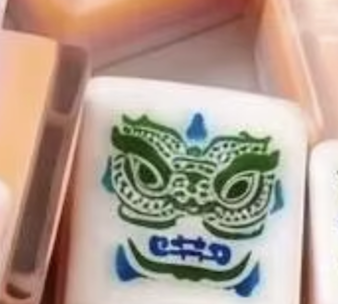
The American Mah Jongg courtesy pass is the optional tile exchange between opposite players after the Charleston is complete. Each pair may agree to exchange 0, 1, 2, or 3 tiles, giving players one last chance to improve their racks before normal play begins.
For beginners, the key rule is simple: the courtesy pass is across the table, it happens after the required Charleston passes and any second Charleston your table chooses to play, and both opposite players must agree on the number of tiles exchanged.
When does the courtesy pass happen?
The courtesy pass happens at the end of the Charleston, before East makes the first discard. In a standard American Mah Jongg setup, players first complete the required Charleston: pass three tiles right, then three tiles across, then three tiles left. After that, the table may do the optional second Charleston: pass three tiles left, then three tiles across, then three tiles right.
Once those passes are done, opposite players may make the courtesy pass across the table. It is not a new round of Charleston; it is a final across-table exchange between partners sitting opposite each other.
Confirm your table’s house rules before play.
Courtesy pass mechanics at a glance
| Question | Standard beginner answer |
|---|---|
| Who passes? | Opposite players pass to each other across the table. |
| How many tiles? | 0, 1, 2, or 3 tiles, by agreement between the two players. |
| When? | After the Charleston sequence and before the first discard. |
| Are tiles shown? | No. Passed tiles stay concealed. |
| Can one player force three tiles? | No. The pair should agree on the number before exchanging. |
| Can you pass a joker? | Jokers are not passed during the Charleston or courtesy pass. |
A clean table script is: “Courtesy?” Then the opposite players agree: “Two,” “One,” “Three,” or “No, thank you.” After both pairs finish, East begins normal play by discarding.
How many tiles should you pass?
Use the number of tiles you pass to protect your best hand direction. The goal is not to be polite by giving away useful tiles; the goal is to improve your rack without helping an opponent more than necessary.
A simple beginner decision rule:
- Pass 0 if every tile in your rack supports your current hand, a backup hand, or a flexible section on the NMJL card.
- Pass 1 if you have one clear orphan that does not connect to your likely hand or backup.
- Pass 2 if you have two tiles that are clearly outside your plan and you still have enough structure left.
- Pass 3 if your rack is still messy and you want maximum fresh information before play begins.
Here is a practical example. Suppose your rack is leaning toward a generic even-number hand, and you have several matching even tiles plus a pair you want to preserve. You also have one isolated odd-number tile and one wind that do not fit your main hand or backup. A two-tile courtesy pass is reasonable: keep the tiles that create pairs, multiples, or card flexibility, and pass the two that are least connected.
If your rack is already close to a specific hand, a smaller courtesy pass is often better. Passing three simply because it is allowed can break up useful flexibility.
What should you avoid passing?
Avoid passing tiles that make your hand easier to read or give away strength you may need later.
Do not pass:
- Jokers, because they are not passed in the Charleston or courtesy pass.
- Pairs you need, because American Mah Jongg hands often require exact pairs that cannot be completed with jokers.
- Tiles that support two possible hands, because flexible tiles are more valuable than single-use discards.
- A tile you just realized completes a section pattern, even if it looked useless at first.
Better candidates to pass are isolated singles with no connection to your likely NMJL card section, duplicate tiles you cannot realistically use, or tiles that would force you toward a hand you no longer want.
Beginner courtesy pass strategy
Before agreeing to a number, take ten seconds to sort your rack into three groups:
- Core tiles: tiles that support your main hand idea.
- Backup tiles: tiles that keep another hand or section alive.
- Loose tiles: tiles with no clear job.
Your courtesy pass should come from the loose group first. If you do not have enough loose tiles, pass fewer. A strong beginner habit is to say “one” or “two” instead of automatically agreeing to “three.” That small pause protects promising racks and teaches you to value flexibility.
Also watch table tempo. The courtesy pass should be thoughtful but quick. You do not need to announce your reasoning, point to the NMJL card, or explain what you are keeping. Choose the number, pass the tiles face down, and move into play.
Where Bird Bam fits in
The courtesy pass is a small moment, but it sits inside a larger flow: deal, Charleston, optional second Charleston, courtesy pass, first discard, calls, exposures, and scoring. Beginners learn faster when the table keeps that flow clear instead of stopping to untangle what happened three turns ago.
Bird Bam is an iOS American Mah Jongg scoring and community/group-play app that helps groups keep hands and games organized, reduce scorekeeping friction, and keep attention on the players around the table. You still need the current NMJL card, but Bird Bam can give your group a cleaner companion for tracking play and scoring after the courtesy pass is over.
If your group wants a simpler way to keep American Mah Jongg organized, Bird Bam gives your table a friendly iOS companion for cleaner scorekeeping and group play.
FAQ
Is the courtesy pass required in American Mah Jongg?
No. The courtesy pass is optional. Opposite players may agree to pass 0, 1, 2, or 3 tiles after the Charleston sequence is complete.
Can I pass fewer tiles than my opposite player wants?
Yes. The pair should agree on the number. If one player only wants to pass one tile, do not force a three-tile pass.
Can jokers be used in the courtesy pass?
No. Jokers are not passed during the Charleston or the courtesy pass. Keep jokers in your rack.
Should beginners always do a three-tile courtesy pass?
No. Three tiles are useful when your rack is weak or unclear, but one or two tiles are better when you already have a strong direction and only a few loose tiles.